With only words did Martin Luther King ignite an entire movement and significantly further the rights and the voices of Black people. With only words did Hitler fuel the massacre of millions of Jews. Both amazing orators, both with a profound effect on the world. The crucial difference: one used language to heal; the other used it to destroy. As humans, we have the responsibility of using this most powerful tool for the good of mankind, unfortunately, we can often fall short.
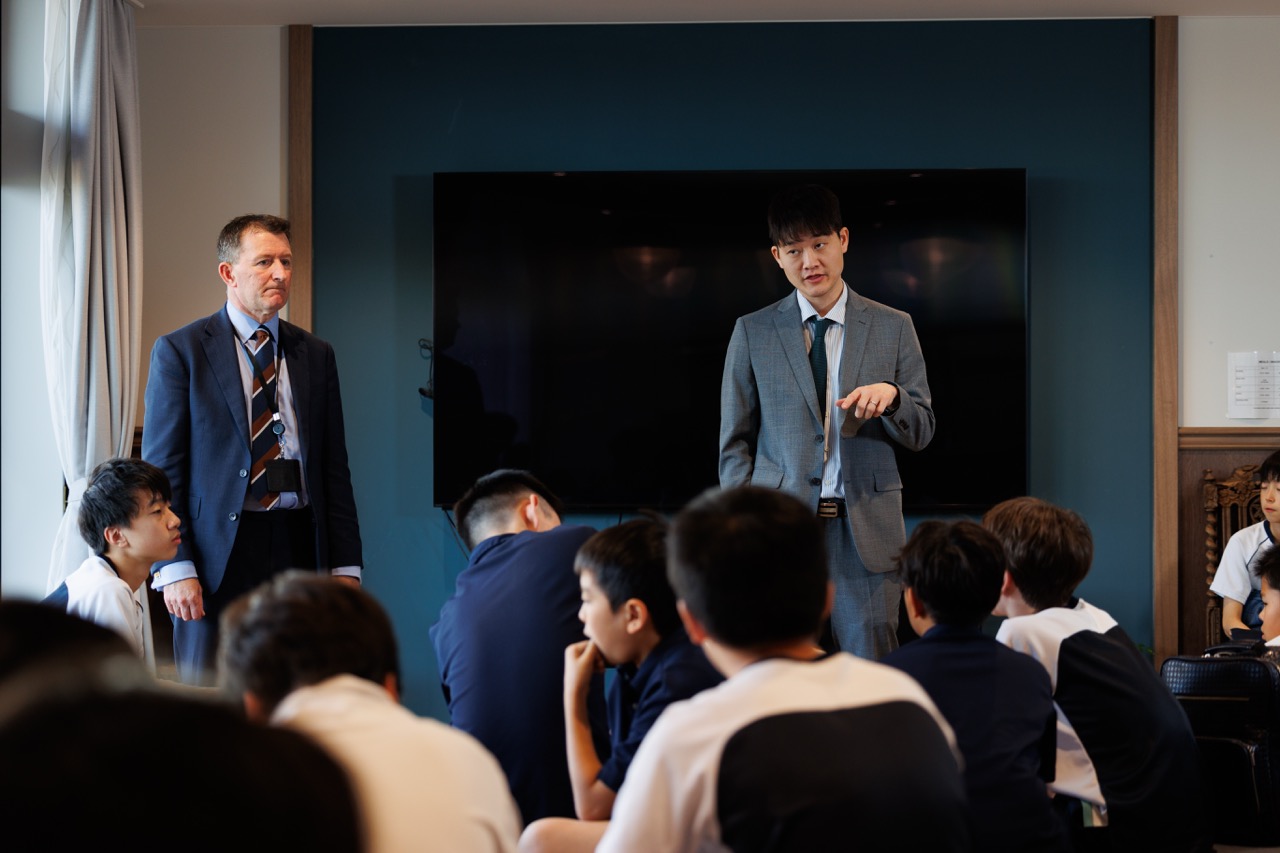
At Rugby School Japan, we talk about educating ‘The Whole Person’ and a perfect place to do this isn’t just through the students’ enrichment program, it’s actually within the classroom itself. As an English teacher, I am constantly educating the students about the power of language and how it can be used to accomplish both great and atrocious things. We learn about how Lady Macbeth uses words to manipulate her husband into killing his king, we learn how George uses his words to give Lennie comfort in his last few minutes of life, we learn how Samwise motivates Frodo by telling him there is still good in the world that’s worth fighting for.
Words are also used to inform us and make us globally-minded citizens. In literature, we engage with thousands of words which broaden our minds in thousands of ways. Through the study of poetry, prose and drama, words inform us about what we may not have encountered previously, words to widen our understanding of the world and our place in it. In poetry, we discover the impact of the Gulf War on the natural world and reflect on the purpose and consequence of war. In prose, we explore the societal structure of the Igbo community, examining its complex traditions, hierarchies and belief systems. In drama, we investigate the American post-bellum society and the struggle for civil rights in the Deep South. Through the study of different cultures, religions and worldviews, we are able to build empathy, develop an understanding of diversity and challenge assumptions.
Often, I wonder whether people really analyse the power of the things they say. We may not have the same widespread effect as Martin Luther King or Hitler but we can have a profound effect on those around us purely with our everyday choice of words. We can choose to manipulate or support, demean or uplift, judge or guide. The way we vocalise words can also have completely different outcomes. Saying a fellow classmate or colleague’s outfit is ‘lovely’ can completely change context if the speaker uses a tone of awe or a tone of sarcasm. As Maya Angelou said, “Words mean more than what is set down on paper. It takes the human voice to infuse them with deeper meaning”.
When we speak to our children, our choice of words can be incredibly powerful in how they shape their minds and values, and how they think they should speak to others. When we tell our children to ‘stop being so sensitive’ we think we are teaching them to be stronger but we are really telling them their feelings are invalid. Using absolutes like ‘You always’ and ‘You never’ can make a child believe they are that absolute and may later use language in similarly fixed, unforgiving ways toward themselves or others. Words don’t vanish once spoken. I’m sure there are times we all remember someone’s words from long ago in our childhood and how they affected us; wouldn’t it be nice if those memories were of words that comforted us, supported us, uplifted us and that made us feel seen and heard.
So, I encourage us all to think before we speak and challenge the outcome we want from what we say. When we choose our words, we choose the kind of world we want to build.