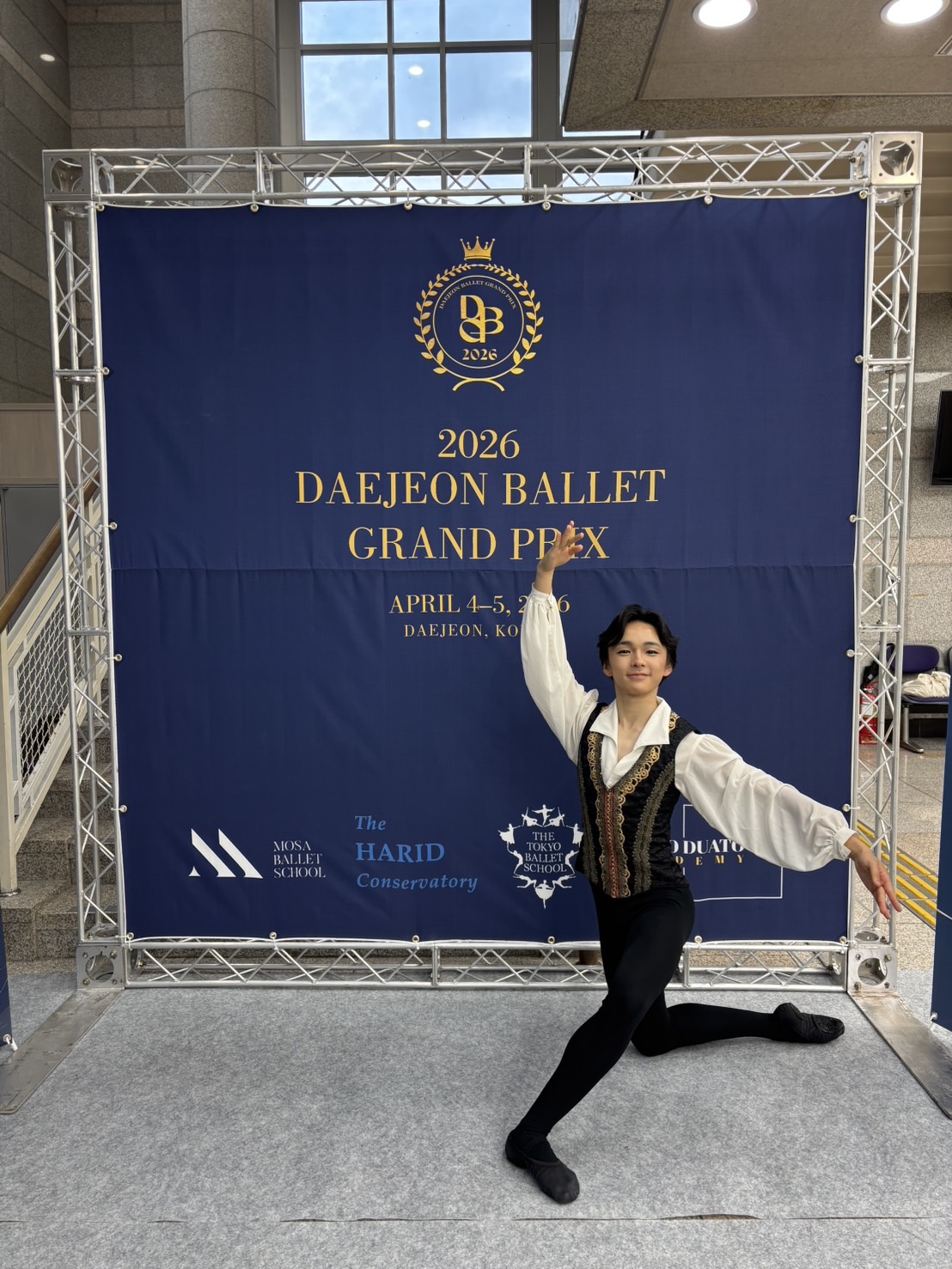
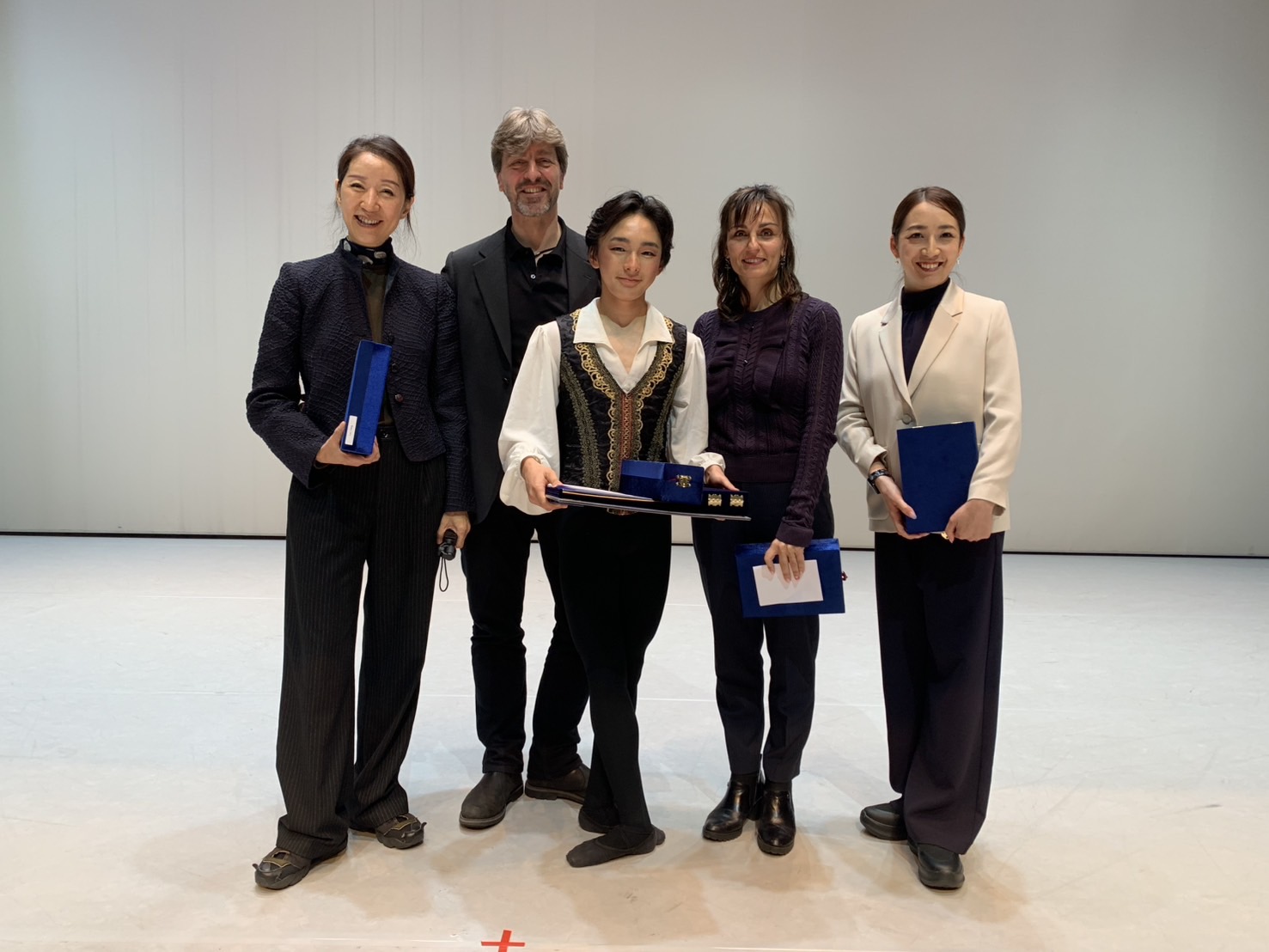
We are delighted to celebrate the remarkable achievement of Hikaru, who was awarded both First Place in the Junior Division and the overall Grand Prix at the inaugural Daejeon Ballet Grand Prix 2026 (DBGP), an international ballet competition held in South Korea.
The Grand Prix is the competition’s highest honour, awarded to one dancer across all age categories. In recognition of this achievement, Hikaru also received scholarships for training programmes in the United States, Spain, and Belgium.
Following this outstanding success, Hikaru reflected on the experience, the discipline behind ballet, and how Rugby School Japan has supported the pursuit of artistic excellence.
The short film below highlights moments from the discussion, while the full transcript that follows provides a more complete reflection on the conversation and its themes.
How did you feel when you received the Grand Prix?
To be honest, I froze for about two seconds and thought, “What?! Me?” There were other dancers, especially from Korea, with incredible technique, so I was genuinely surprised and wondered why I had been chosen.
At the same time, I felt a huge sense of relief because all of the preparation, sacrifices, and difficult moments had been worth it.
How much preparation did you do for this competition?
Three weeks before this competition, I took part in another major event called the Japan Cup. I became nervous, made a mistake, and did not pass the preliminary round. I was devastated.
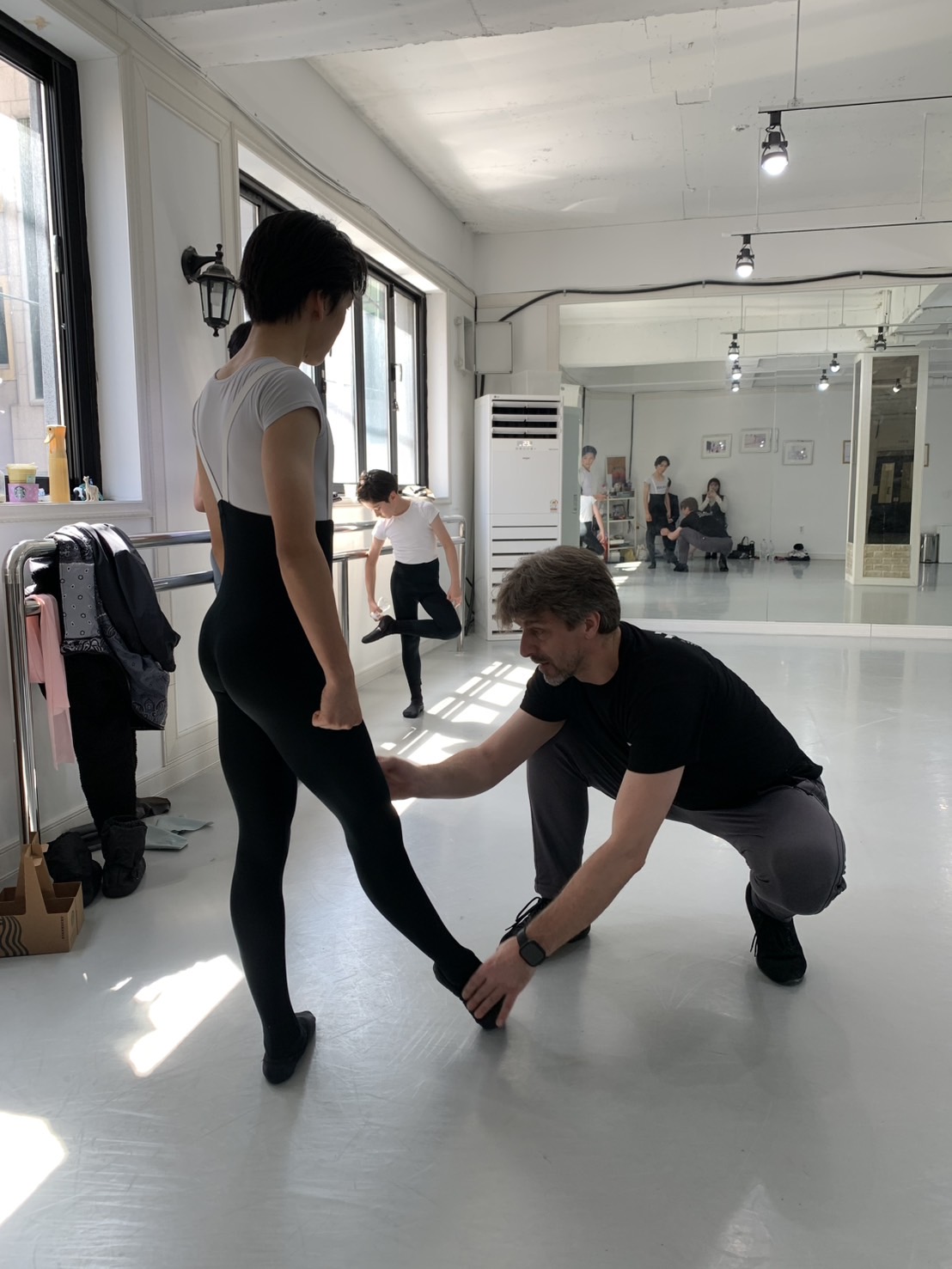
Afterwards, I immediately reviewed my training and began doing an additional 40 minutes of self-practice every night. I filmed myself constantly to improve every detail of my movement.
At home, my family even created a practice space for me in the living room, so I was almost always practising whenever I was awake.
What has ballet taught you beyond technique and performance?
Ballet has taught me communication, aspiration, and respect.
Through dancing with others, I have learned how to support people and communicate non-verbally. Through performances and lessons, I have learned to set both short-term and long-term goals and enjoy the process of building my future.
Most importantly, ballet has taught me the importance of respecting teachers, classmates, staff, and everyone who supports my journey. Respect creates a positive atmosphere and strong relationships.
It has also given me a deep appreciation for ballet itself as an art form.
How does Rugby School Japan’s “Whole Person, Whole Point” philosophy support your pursuit of ballet?
More than anything, it has taught me discipline, determination, and integrity.
Through Rugby School Japan’s values, I have learned to approach ballet with both ambition and character. When preparing for a performance, I try to understand the piece as deeply as possible and think carefully about its meaning and purpose.
In competitions, beyond being “competitors,” we support and respect one another as fellow dancers, even across language barriers. RSJ has taught me how respect and kindness can broaden your perspective and create a better environment.
It has also shown me that aspiration is not only about winning, but about striving to grow, improve, and share something meaningful through performance.
What motivates you to keep improving?
Ballet, opera, and theatre are “living” art forms.
Even when performing the same role, every performance is completely different. There is always risk, and every performance only happens once. That is what makes it exciting and meaningful.
My motivation comes from wanting to preserve and carry forward that tradition and heritage.
Because I already have the opportunity to perform, I want every performance to communicate something meaningful. That is why I continue attending classes every day and taking both my training and academic studies seriously. I want to develop not only as an artist, but also as a student and as a person.
What are your future goals?
I enjoy performing, but in the future I would also like to be involved in creating works in ballet, drama, and film.
By watching modern productions such as La Dame aux Camélias, I have come to realise how performing arts combine story, music, stage design, choreography, costumes, and performance into something incredibly powerful.
I would like to use that power to communicate meaningful ideas to society, whether about history, social issues, the future, or even space.
Hikaru’s achievement reflects not only exceptional talent and dedication, but also the resilience, curiosity, and ambition we seek to nurture at Rugby School Japan. We offer our warmest congratulations and look forward to following the next stages of this exciting artistic journey.