What do the familiar scent of vanilla and rising sea levels in Antarctica have in common?
At first glance, very little. Yet both offer fascinating opportunities to explore how science helps us understand the world, from the chemistry behind everyday experiences to the complex environmental challenges facing our planet.
Recently, pupils at Rugby School Japan had the opportunity to explore these subjects with two visiting scientists, whose research and professional experiences brought fresh perspectives to academic learning.
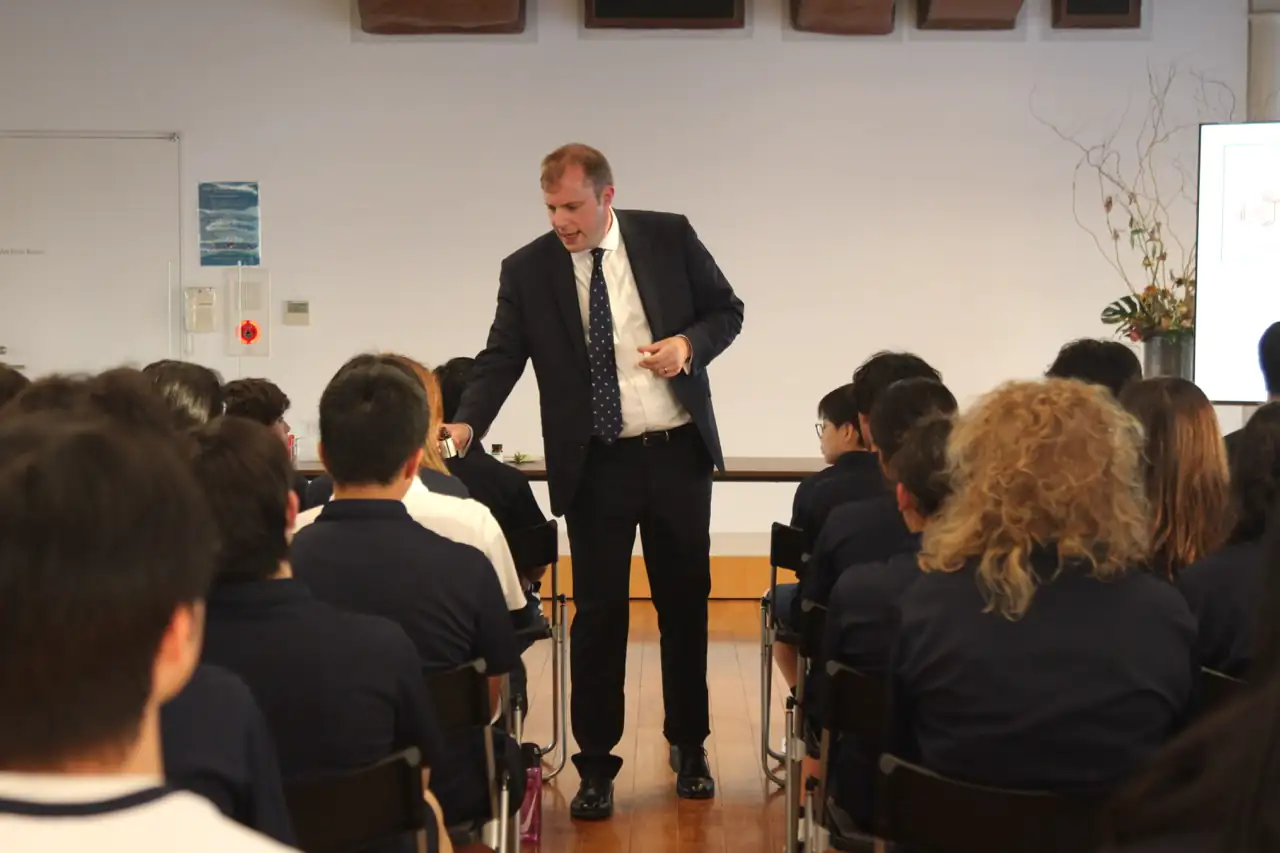
Dr Stephen Belding, Director of Academic Programmes for Rugby School Global Partnerships and former Head of Chemistry at Rugby School, delivered two lectures, “Chemistry of Smells” and “Chemistry of Explosives”, introducing pupils to the science behind familiar scents and powerful chemical reactions.
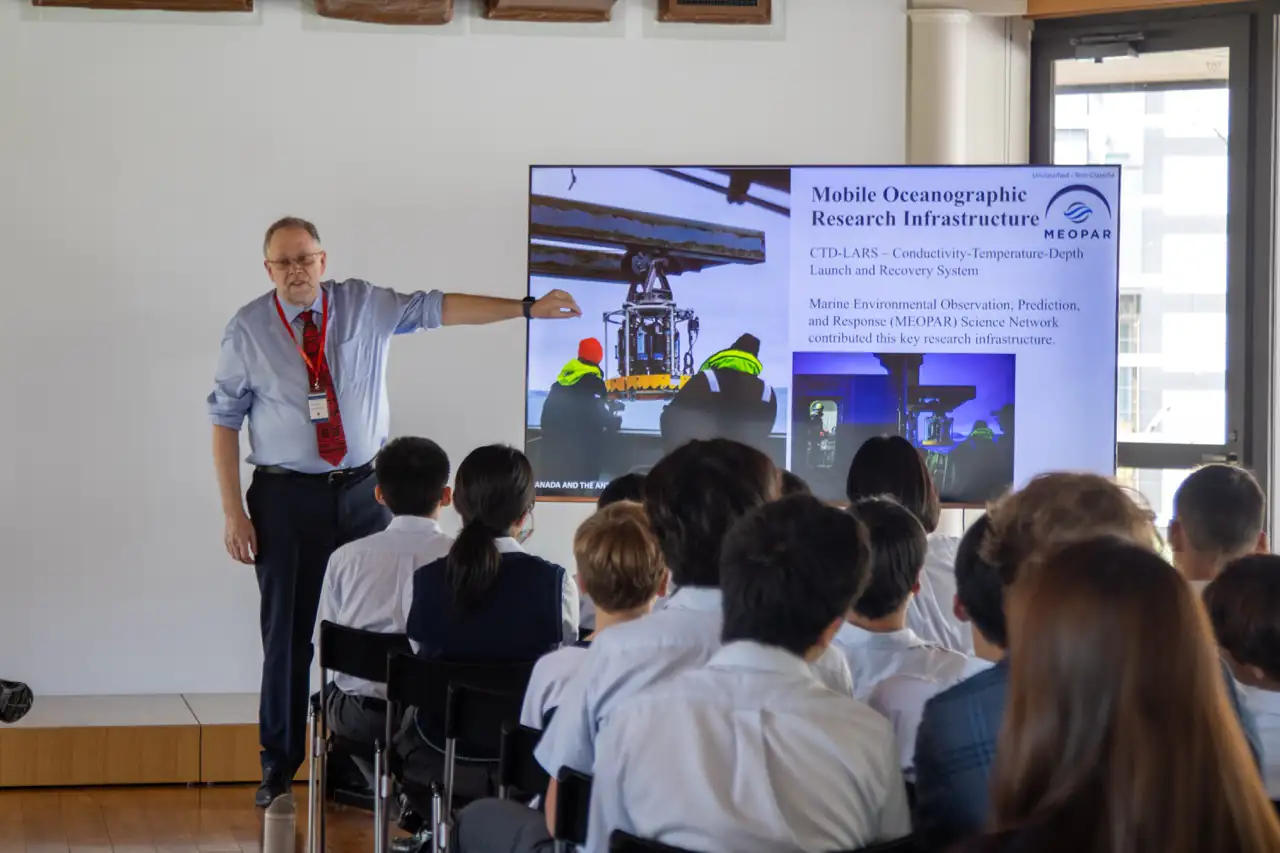
Dr Thomas James, Chief Scientist of the Canadian Antarctic Research Expedition, joined our Academic Forum to share insights from his Antarctic fieldwork and research into how melting ice sheets influence sea levels around the world.
Both visits offered pupils an opportunity to encounter scientific ideas beyond their usual studies and discover how research connects with everyday life and some of the world’s most pressing challenges.
Connecting Learning with the Wider World
Although the two visits explored very different scientific fields, they shared an important purpose: encouraging pupils to look beyond familiar knowledge, question assumptions and discover how academic ideas connect with the world around them.
At RSJ, opportunities to learn from visiting experts form part of a wider approach to academic enrichment. Through our Academic Forum, Academic Conference, expert lectures, research opportunities across the Rugby School network and connections with local partners, pupils encounter new disciplines, engage with specialists and explore subjects beyond their usual curriculum.
These experiences are not simply about gaining additional knowledge. They can spark an interest in an unfamiliar field, deepen an existing passion or encourage a pupil to consider questions and possibilities they had never previously imagined.
They also offer valuable insights into the work of scientists and researchers: the curiosity that drives their investigations, the challenges they encounter and the ways their discoveries can contribute to society.
As part of our Whole Person approach to education, we want pupils to develop not only a strong academic foundation, but also the confidence to explore unfamiliar ideas, think independently and remain open to different perspectives.
After all, an inspiring encounter with a new idea can sometimes be the beginning of a much longer intellectual journey.